
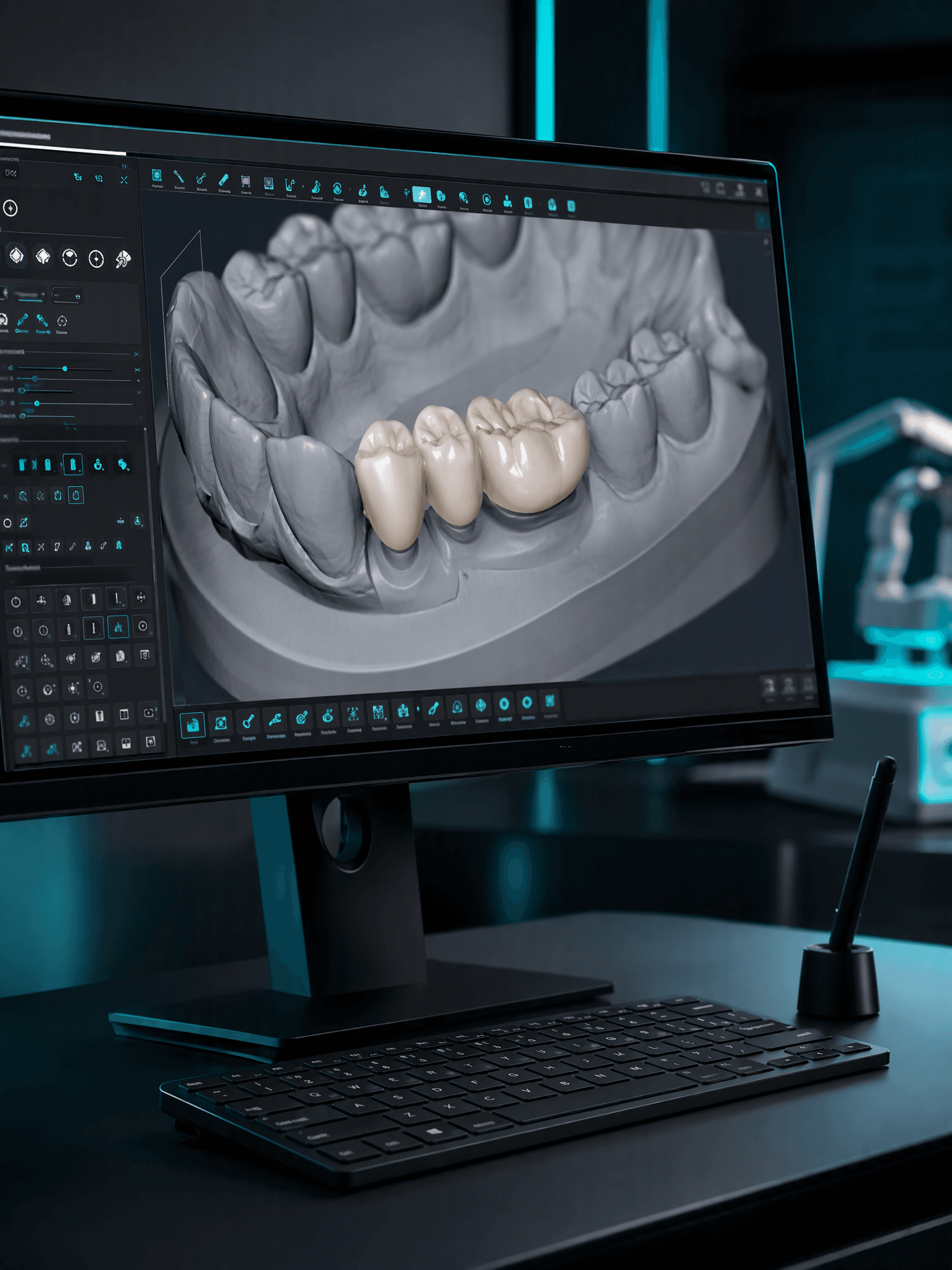
Is one actually better than the other?
Not in any way that shows up in the final restoration. Exocad and 3Shape are both mature, production-grade dental CAD platforms, and a skilled designer produces a clean, well-fitting crown in either one. The differences that actually matter for a lab, whether you are choosing which system to run in-house or evaluating an outsourcing partner who works in one over the other, come down to file compatibility, workflow fit, licensing, and how the platform sits inside the rest of your digital setup.
This comparison gets asked a lot because the two platforms dominate the space, and because the answer genuinely depends on what your lab already has rather than which software is objectively stronger. Neither company published this article, so here is the practical version.
File compatibility: does it actually matter which one your lab uses?
Less than most labs assume. Both platforms accept standard STL files from essentially any intraoral or lab scanner on the market, so a scan taken on one brand of scanner is not locked out of either design software. This matters directly for outsourcing: if a partner designs in 3Shape and your lab scans with a different system entirely, your files still open and design correctly on their end, and the output still exports in whatever format your mill or printer needs.
Where compatibility questions actually come up is at the edges, proprietary file types from a specific manufacturer's closed ecosystem, or older scanner models with limited export options. If you are unsure, the honest test is simple: send a sample STL and ask the provider to confirm it opens cleanly before you commit a real case.
Workflow differences that show up in daily use
The two platforms organize the design process a little differently, and designers who have used one for years often have a real preference, but the differences are workflow habits rather than capability gaps. Exocad has historically been favored by labs that value an open, vendor-neutral setup, since it was built from the start to work across many scanner and mill brands rather than as part of one company's closed hardware ecosystem. 3Shape's software is often used alongside 3Shape's own TRIOS intraoral scanners, and labs and clinics already invested in that scanner hardware sometimes prefer keeping the whole chain in one ecosystem for support and integration reasons.
Neither of these is a limitation in practice for outsourced design specifically, since you are sending files in and getting a design back, not operating the software yourself. It matters more if your lab is deciding which platform to invest in and train on internally.
Licensing: how the two platforms differ
This is where the practical differences are more real. Exocad has traditionally offered a module-based model, where a lab licenses only the specific design modules it actually uses (crown and bridge, full denture, implant planning, and so on), which suits labs with a narrow, specific case mix. 3Shape's licensing has moved more toward a broader package and subscription structure over time. Exact pricing and terms change and vary by region and reseller, so it is worth getting a current quote directly from each company rather than relying on anything published online, including this article.
For a lab that is outsourcing rather than licensing software directly, this mostly matters in one indirect way: a provider's own licensing model can affect how flexible they are on case types and volume, since a module-based license means they may need to be running the specific module your case type requires.
What it means when your outsourcing partner works in one versus the other
Practically, very little, and that is worth saying plainly since it is the actual question most labs have. A competent designer working in either platform should deliver a design that fits, occludes correctly, and exports cleanly. What is worth asking a potential partner is not "which software do you use" but "what case types have you actually delivered recently, and can I see examples." The platform is a tool. The experience of the person or team using it is what actually determines whether your case comes back right.
Module completeness for specific case types
Both platforms cover standard crown and bridge, full and partial dentures, and implant-related design comprehensively at this point. Where gaps have historically shown up is in newer or more specialized modules, certain orthodontic appliance types or highly specific implant systems, where one platform's library was ahead of the other's at a given point in time. This changes with software updates on both sides, so if your case involves an unusual restoration type or implant system, the right move is to ask your provider directly whether their current setup supports it, rather than assuming based on general reputation that may be outdated.
So which one should your lab use?
If you are licensing software to design in-house, the honest answer depends on your case mix, whether you already own a scanner tied to one ecosystem, and your budget structure, module-based versus subscription. If you are outsourcing the design work instead of licensing anything yourself, the software your partner uses matters far less than their turnaround, revision policy, and whether someone with real clinical judgment reviews the case before it comes back to you. That last point is worth taking seriously: a design that is technically correct in either platform can still miss a margin or an occlusal contact if nobody with clinical experience checked it.
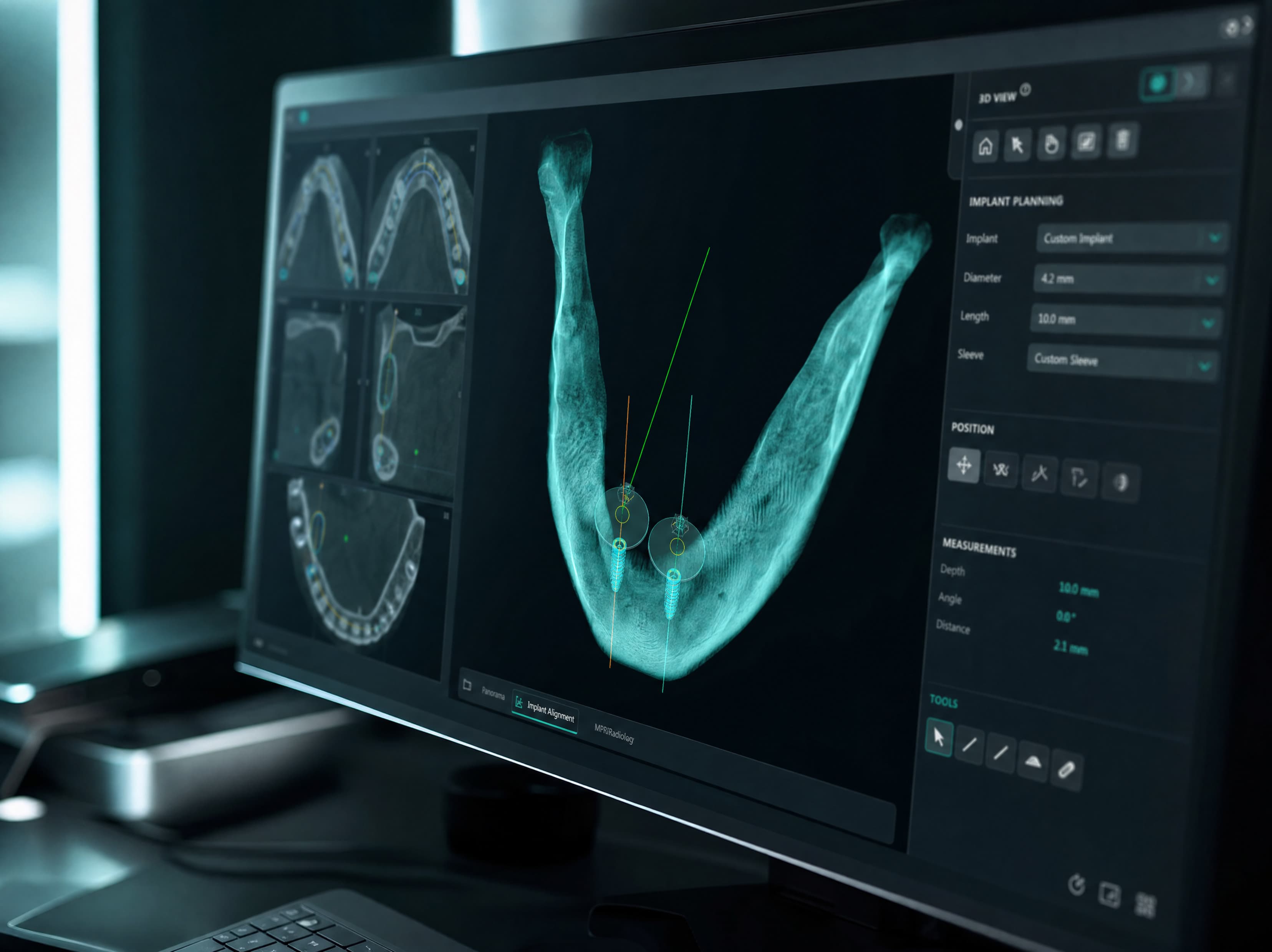
If you want to test this without committing to either platform yourself, Denta Dynamics' Exocad design service sends back a dentist-reviewed design at $15 per tooth, turned around within 24 hours, regardless of which scanner or file format your case started from. If the case also needs implant placement worked out first, our implant planning service covers that at the same per-tooth rate.